Add a Downloaded MP3 to Music on Mac Without Losing Its Source
A downloaded MP3 becomes part of the Music app's library through an import action, not simply because it exists in your Downloads folder. The app's file settings affect whether media is copied into its managed folder or referenced from another location. Check that behavior before tidying away the original.
After saving eligible audio through Ytmp3, begin with a file you can locate and play. Importing a missing, incomplete or incorrectly labeled download will not solve its underlying problem. First verify the audio, then decide how you want the library to manage it.
Start with a known local file
Locate the MP3 in Finder rather than opening only a browser-history entry. Give it a recognizable descriptive name while keeping its real extension. If several versions have similar names, confirm which recording you intend to add before choosing a folder-wide import.
For a fictional collection of your own rehearsal recordings, you might start with a single verified take. Play enough of it to identify the performance and check that the transfer completed. A small first import is easier to understand than adding an entire mixed Downloads folder.
Keep unrelated documents and temporary files out of the selection. The purpose is to build a useful audio library, not to make every recent download appear in the app. Narrow selection also makes it easier to spot an unintended duplicate later.
Review how Music handles imported files
Music has a setting controlling whether files are copied to its Media folder when they are added to the library. Depending on that preference and the current version, the import-related command can be labeled differently. Review the app's Files settings rather than assuming that every import creates the same storage arrangement.
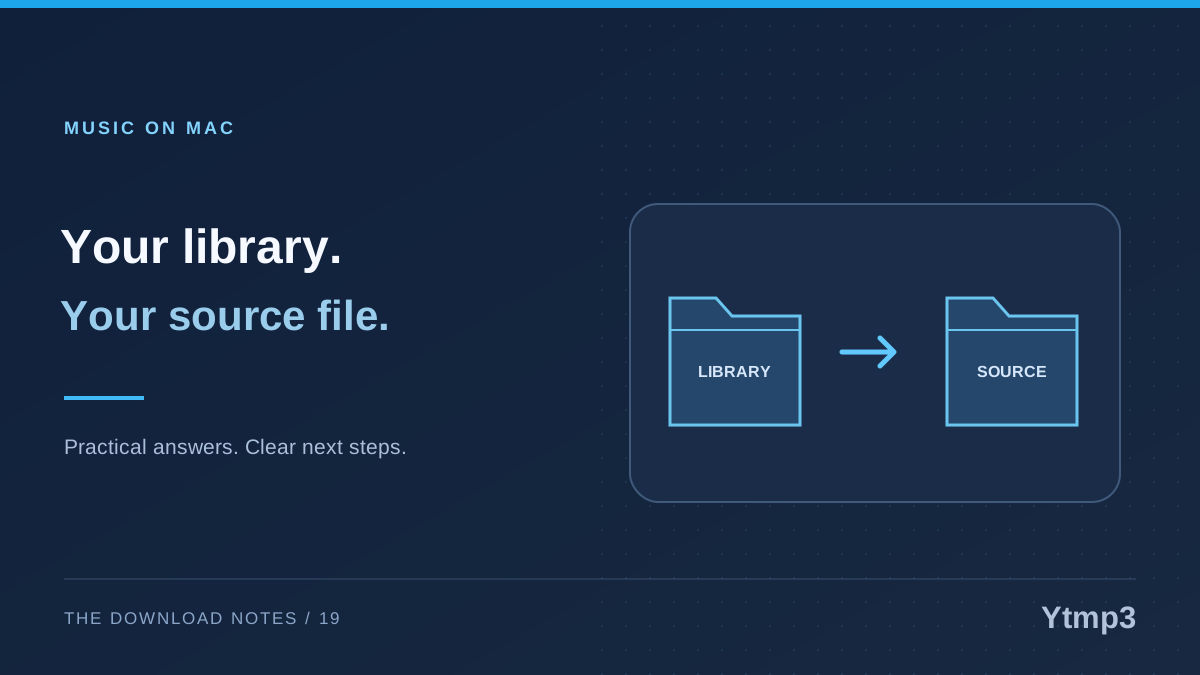
A managed copy and a reference to an existing file are different choices. A copy can leave the original in its earlier location while the library uses another file. A reference relies on the source remaining available where the app expects it.
Choose based on your organization needs, not merely the shortest path through a dialog. If you already maintain a stable collection folder, understand what keeping references involves. If you prefer the app to manage media, verify where its copies are stored before planning cleanup.
Import the intended file or folder
Use Music's available import or add-to-library action and select the verified file. The app also supports dragging a file or folder from Finder into the Music window. Check the resulting library entry before expanding the selection to more recordings.
If you add a folder, consider everything it contains. A temporary preparation folder with only the intended audio can be easier to review than a broad location holding unrelated material. Do not move your only source into such a folder without understanding whether another app already uses its current location.
For example, begin with one personal recording, confirm that it appears in the library and play it there. Then repeat with the rest of the collection. That sequence gives you a clear comparison if a later item is missing or behaves differently.
Avoid breaking a reference during cleanup
A library entry is not proof that an independent copy was created. If the entry references a file that you later move or remove, playback may fail because the app can no longer find that source. Check the actual storage behavior before deleting an older-looking file.
This is especially important when a cleanup follows a successful import. The tempting sequence is to see the title in Music and immediately empty the Downloads folder. A safer sequence is to verify the library's location and playback first, then decide which original copies are genuinely unnecessary.
If you want more consistent filenames, review the Finder batch-renaming workflow before making broad changes. Renaming or moving files already referenced by a library can have consequences beyond how the folder looks.
Keep cloud storage and library membership separate
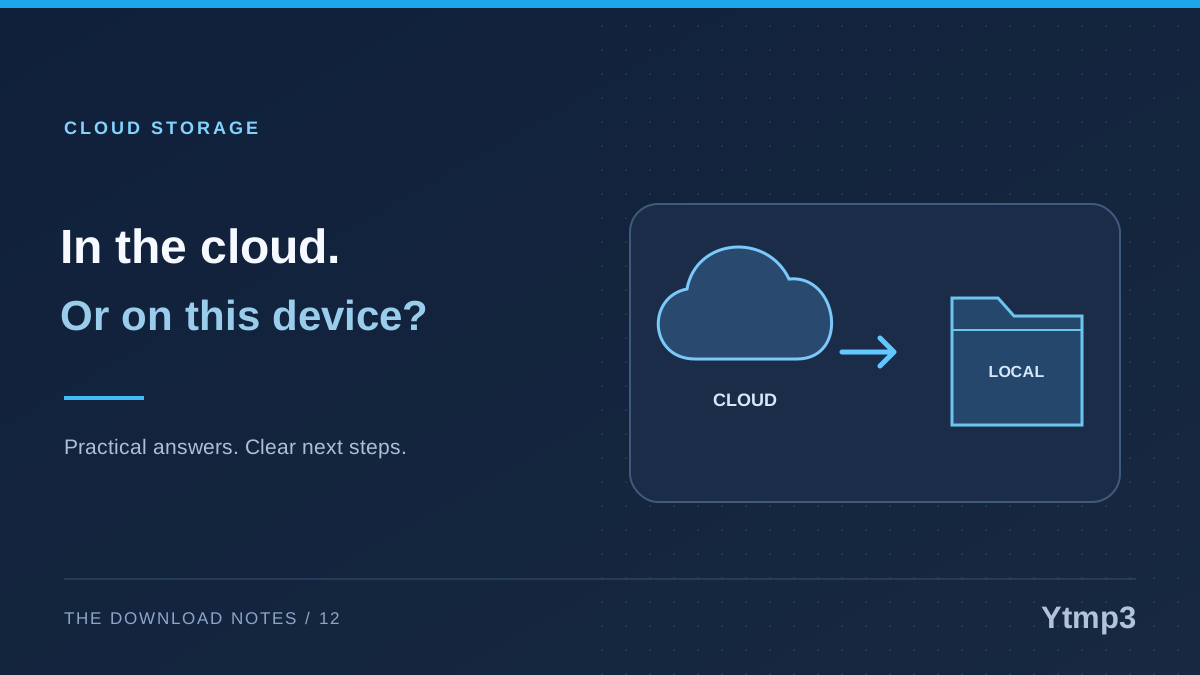
An audio file in a cloud folder is not automatically a Music-library entry. Likewise, a library title does not by itself prove that the same file is available on every device. Storage, import and synchronization are separate parts of a larger workflow.
The explanation of iCloud audio versus a local copy is useful when preparing a recording for another device. Verify the destination device rather than assuming that an import on the Mac completed every later step.
For a simple Mac listening collection, keep the goal modest and testable: the intended recording appears in the library, opens from its expected location and plays correctly. You can add more elaborate organization later without confusing it with the basic import.
Why did a song stop playing after I moved its file?
The library may have been referencing the earlier location. Establish how the entry was stored and where the source is now before adding more copies or deleting existing entries.
Will importing always create another copy?
Do not assume so. Check the copy-to-Media-folder preference and the behavior of the action you use in your installed version of Music.
A successful import should leave you with both a playable library entry and a clear understanding of where its audio lives. Verify that relationship first, then organize or remove temporary downloads deliberately.