Copy Music Between an Android Phone and a USB Drive
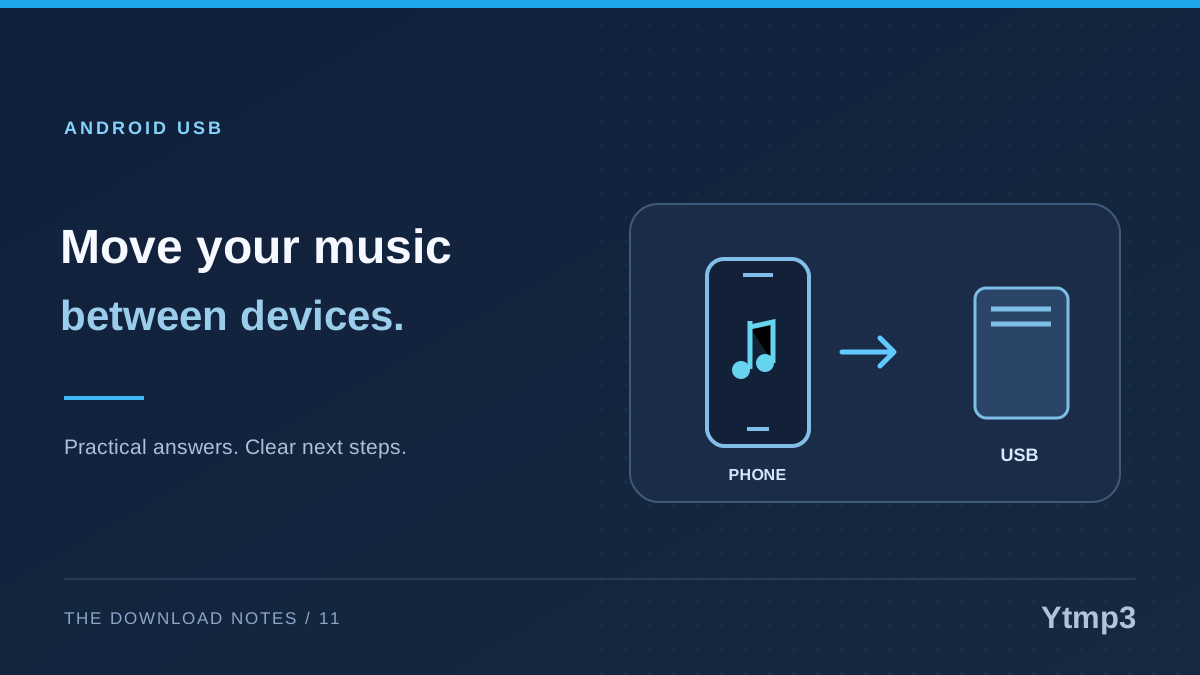
On a supported Android setup, a file manager can copy music between the phone and a connected USB drive. Start with a recognized storage device and one small test file. Verify the destination before transferring a larger collection or deleting anything from its original location.
This can be useful after saving eligible audio through Ytmp3, especially when you want a separate copy for another device. It is not a promise that every phone, adapter, drive or player will work together. USB storage support and the ability to play a particular media file are separate questions.
Check the connection before selecting files
Your phone needs to recognize the connected drive before a file-management app can browse it. Use a suitable connection for the device and look for the storage notification or listed USB location. Files by Google provides a USB storage workflow on supported Android devices.
If the drive does not appear, do not immediately accept a prompt to erase or format it. The drive may contain files you need, and formatting is not a routine part of copying a song. Check the phone's guidance and the storage device's compatibility first.
Also consider power and the physical connection. A loose connection or unsuitable adapter can interrupt a transfer. Keep the phone and drive in a stable position, and avoid beginning a large copy while you need to disconnect the cable for another task.
Know which location is the source
Before choosing Copy, identify the source and destination in plain language. For example: “the verified recording on my phone goes into the Practice folder on the USB drive.” That short statement helps prevent copying in the wrong direction or creating another copy in the same location.
Open the actual folder rather than relying on a recent-items view that combines several locations. Two entries with the same title can refer to different copies. Check the storage label and the folder path shown by the file manager.
A fictional file named practice-intro.mp3 is a useful first test if you recognize its contents. Choose a recording you own or have permission to transfer, and keep the original while checking the new copy. There is no need to begin with an entire mixed Downloads folder.
Copy a small sample first
In Files by Google, open the recognized storage location, select the intended file and use the available Copy to action. Choose the destination folder and confirm the copy there. The labels and layout can vary by device and app version.
Copying is a clearer first step than moving when you want to retain a fallback. A move is intended to relocate the item, whereas a copy keeps the source while creating a destination item. Do not treat those commands as interchangeable ways to press the same button.
If a destination already contains the same name, inspect the choices before replacing anything. An older file may be a different take, not an obsolete duplicate. Give a test copy a recognizable name when necessary, while preserving its real format extension.
Verify the destination, not the recent playlist
Once the file manager reports completion, browse directly to the destination folder. Open the copied file from there. A music app's recent list may reopen the source you played earlier, which would not test the new location.
Check the recording's identity and play a useful portion. For a group of files, compare the expected count with the copied count and inspect more than one sample. A single successful transfer is a good first check, not proof that every later item will behave identically.
- Confirm the file is on the intended storage device.
- Check that its name and format are recognizable.
- Open the destination copy directly.
- Verify the intended recording and usable playback.
- Keep the source until the transfer is understood.
If you use an SD card instead, follow the distinct Android SD card copying workflow. Both involve file management, but a phone's internal card configuration and a connected USB drive may appear differently.
Finish the transfer deliberately
Wait for active transfers to finish before disconnecting storage. Use the device's available eject or unmount control when provided. Avoid pulling the cable while the app is still copying or reporting an operation in progress.
After a successful transfer, decide whether both copies serve a purpose. Keeping one on removable storage can be useful, but it is not automatically a tested backup plan. Label the destination clearly and avoid deleting the original solely because a second filename appeared.
If you need to send several recordings together rather than browse them individually, a ZIP package illustrates the difference between bundling and transferring. The receiving device must still be able to open the package and its audio files.
Why does the drive appear but the music not play?
Recognizing storage does not establish media compatibility. Check that the transfer completed and that the intended player supports the actual file, without changing extensions or installing unexpected software.
Does copying remove the original?
A copy operation is intended to retain it. Verify both locations and keep any later cleanup separate from the transfer itself.
A careful USB handoff is a short sequence: recognize the drive, identify both locations, copy a sample, verify it and then expand. That approach keeps errors small and makes the final collection easier to trust.