YouTube Video Links and Playlist Links Are Different Inputs
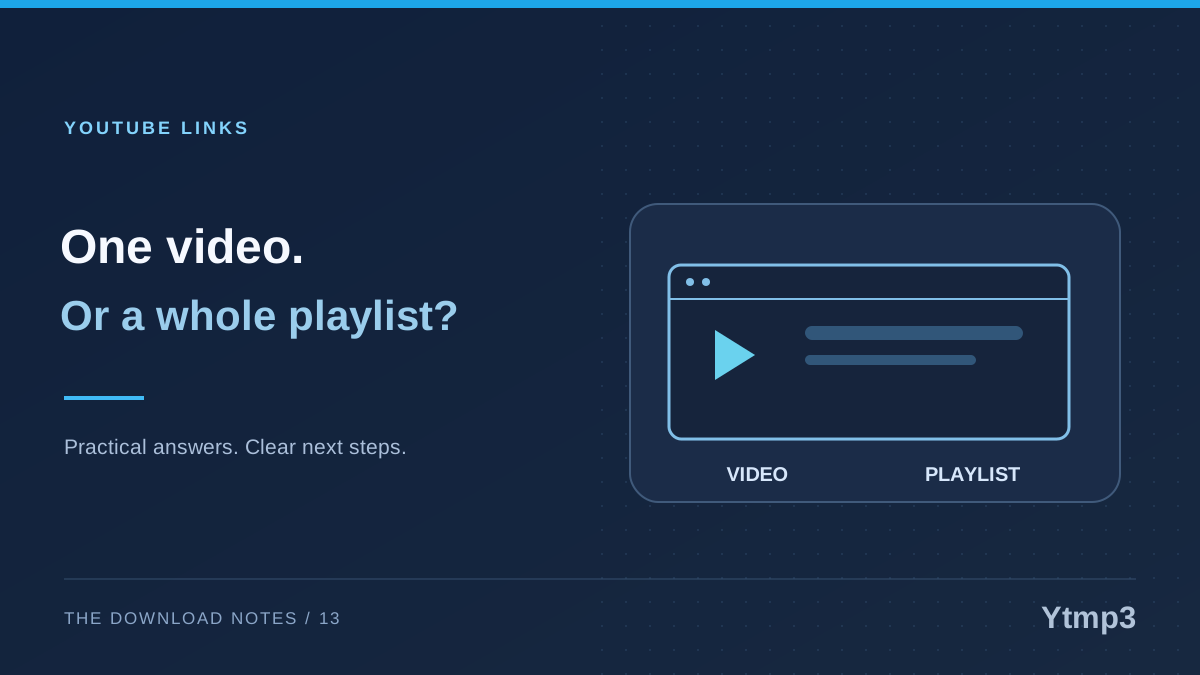
A YouTube video link identifies an individual video, while a playlist link refers to a collection. A video can also be opened within a playlist, which makes the distinction less obvious when copying its address. Before using a downloader, decide whether you mean one recording or the collection around it.
On Ytmp3, confirm the source returned by the form instead of assuming that any copied YouTube address represents the exact item you had in mind. Pasting a playlist does not establish support for downloading every entry. The result and available options must be checked for the individual task.
Identify the recording you actually want
Start with the intended item in plain language. For example, you may want the second recording from your own rehearsal playlist, not every rehearsal in that collection. Knowing that distinction helps you select the correct sharing action and recognize the expected result.
A playlist title can describe a theme rather than a specific recording. Several items may have similar names, and the collection can include versions that differ in length or performance. Choose the individual source deliberately before deciding which output would be useful.
Do not rely only on a position such as “the third video.” Collection contents or ordering can change. A recognizable title and the source you intended are better checks when returning to the task later.
Understand the collection context
YouTube provides separate ways to share a video and a playlist. When a video is being watched inside a collection, its address can carry both an individual-video reference and playlist context. That context is useful for viewing, but another service may handle the input differently.
This is why the same copied address should not be treated as a universal instruction to download a whole collection. A tool might select a video, reject the input or handle it through a capability documented by that tool. Only an actual supported feature establishes what will happen.
The practical solution is not to experiment with random address fragments. Use the platform's sharing control for the item you mean, then inspect the result after pasting. If you are uncertain which source was selected, stop before requesting a file and return to the original video.
Copy the specific source and compare the result
Open the individual recording and use its video-sharing action when that is the target. Paste the link into the search or conversion form. Compare the displayed information with the source you intended before continuing to an available output.
For a collection of your own practice takes, the expected result might have a distinctive title and duration. Use whatever identifying information the actual page displays. Do not invent certainty from a generic thumbnail or from the fact that the form accepted the link.
- Decide which individual recording you need.
- Open that source rather than only the playlist overview.
- Use the appropriate video-sharing action.
- Paste the link and inspect the returned source.
- Select an available output only after that check.
The Y2Mate MP3 and MP4 page focuses on choosing sound or picture once a source is identified. That format decision comes after source selection, not before it.
Do not confuse access with permission or availability
A shared link does not remove a video's access restrictions. A private or otherwise unavailable item may remain inaccessible, even when its entry appears in a collection. Do not try to work around an account or access requirement through a downloader.
Likewise, the ability to view a public recording does not automatically establish permission to save or redistribute it. Use your own material or content you are allowed to download, and respect applicable restrictions. This is a practical source-selection workflow, not a statement that every item in a playlist is eligible.
If the expected source is missing or unavailable, describe that result accurately. Replacing it with a similarly titled upload is a new selection, not a guaranteed substitute for the same recording.
Keep timestamps and collection links separate
A copied link may include another kind of context: a playback start time. That is different again from identifying a collection. A link can tell a viewer where to begin watching without establishing how a downloader will produce a file.
The article on timestamp links and trimmed downloads explains that boundary. Check each part of your intent separately: which video, which portion if supported, and which available output.
Does pasting a playlist download every video?
Do not assume it does. A collection link is not evidence of batch-download support. Use only capabilities the actual tool provides and check the returned item.
Does a shared playlist make private videos public?
No. Sharing a collection does not remove the access restrictions on its individual entries.
A clear input makes the rest of the workflow easier to verify. Select the intended recording, share that source, compare the result and then choose the format you need. The playlist can remain useful context without being mistaken for an instruction to process every item.